
Modern communication systems are among the most advanced technologies ever built—global, high-bandwidth, and deeply integrated into every aspect of modern life. They connect cities, power economies, coordinate defense, and enable real-time global operations.
But they are engineered for environments where air, spectrum, power, and access can be assumed.
When environments become hostile—through war, electromagnetic disruption, solar events, or the realities of operating beyond Earth—the foundations modern communication relies on begin to erode. Even the most advanced networks can go silent at the moment continuity matters most.
There is currently no communication layer designed specifically for those conditions.
We are building that layer.
SeismicComm is developing a ground-coupled communication system that transmits data through solid earth, rock, and sediment using controlled seismic signaling. Instead of relying on radio propagation, satellites, towers, or exposed infrastructure, our system operates beneath the surface—anchored in the physical world and independent of air, orbit, and contested spectrum.
By coupling directly to the ground, SeismicComm creates a communication layer that is inherently resilient to interference, obstruction, and environmental extremes. Signals propagate where radio cannot, remain intact where spectrum is denied, and persist where surface systems degrade or fail. The medium itself becomes the network.
This architecture enables persistent, low-probability-of-intercept communication in environments where conventional systems cannot be trusted—inside hardened facilities, beneath dense urban terrain, across disrupted battlefields, and within future off-world habitats. When traditional networks fragment under pressure, SeismicComm maintains continuity, coordination, and command.
We are not adding another link to the existing communication stack. We are building a parallel layer beneath it—designed to remain operational when the operating environment no longer supports conventional assumptions.
SeismicComm fills a critical gap in modern communication architecture: the ability to remain connected when conditions no longer allow communication to fail.
SeismicComm
Communication that survives when everything else fails.
Our Mission
Our mission is to create a resilient communication backbone that endures through disruption, denial, and the expansion of human presence beyond Earth.

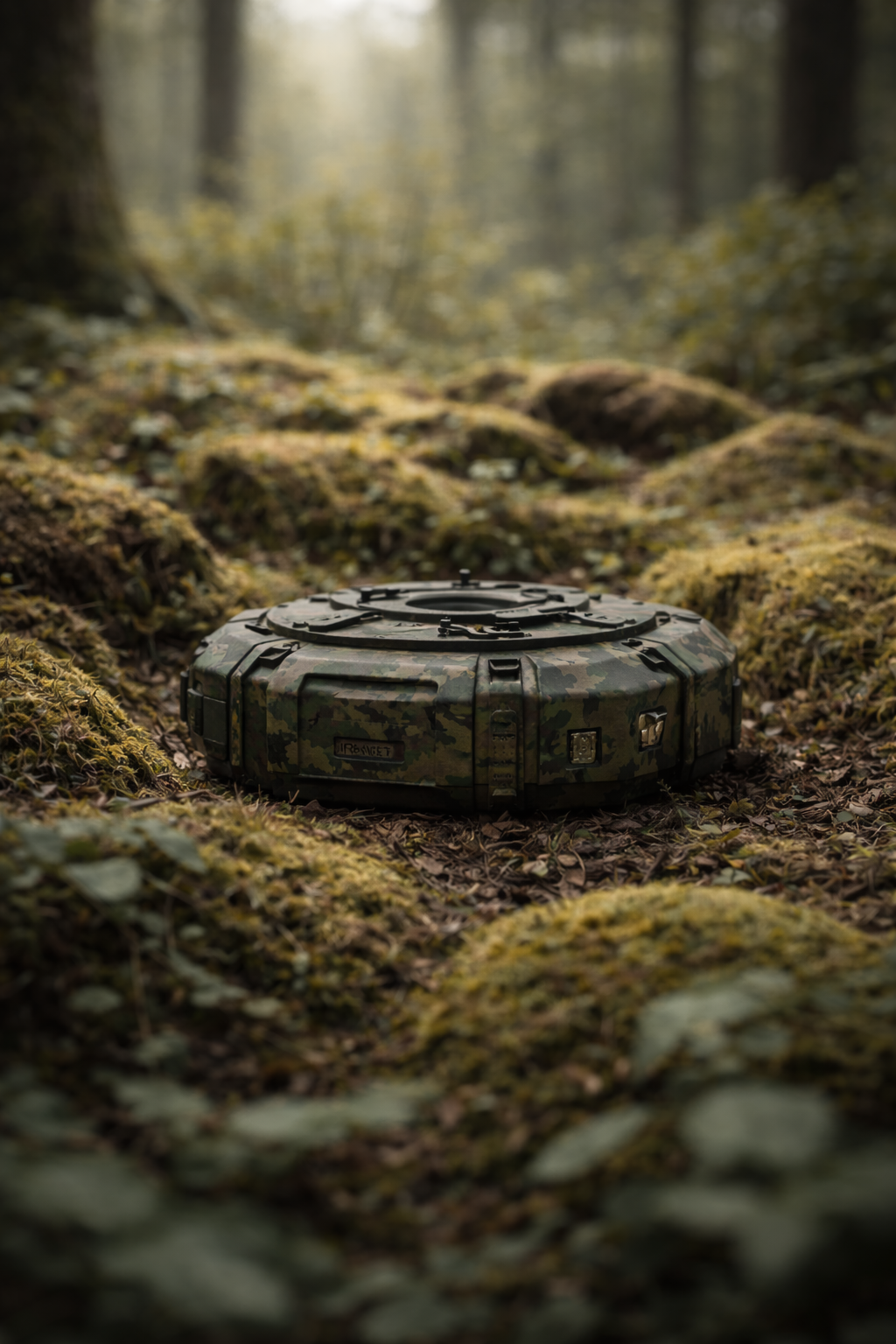

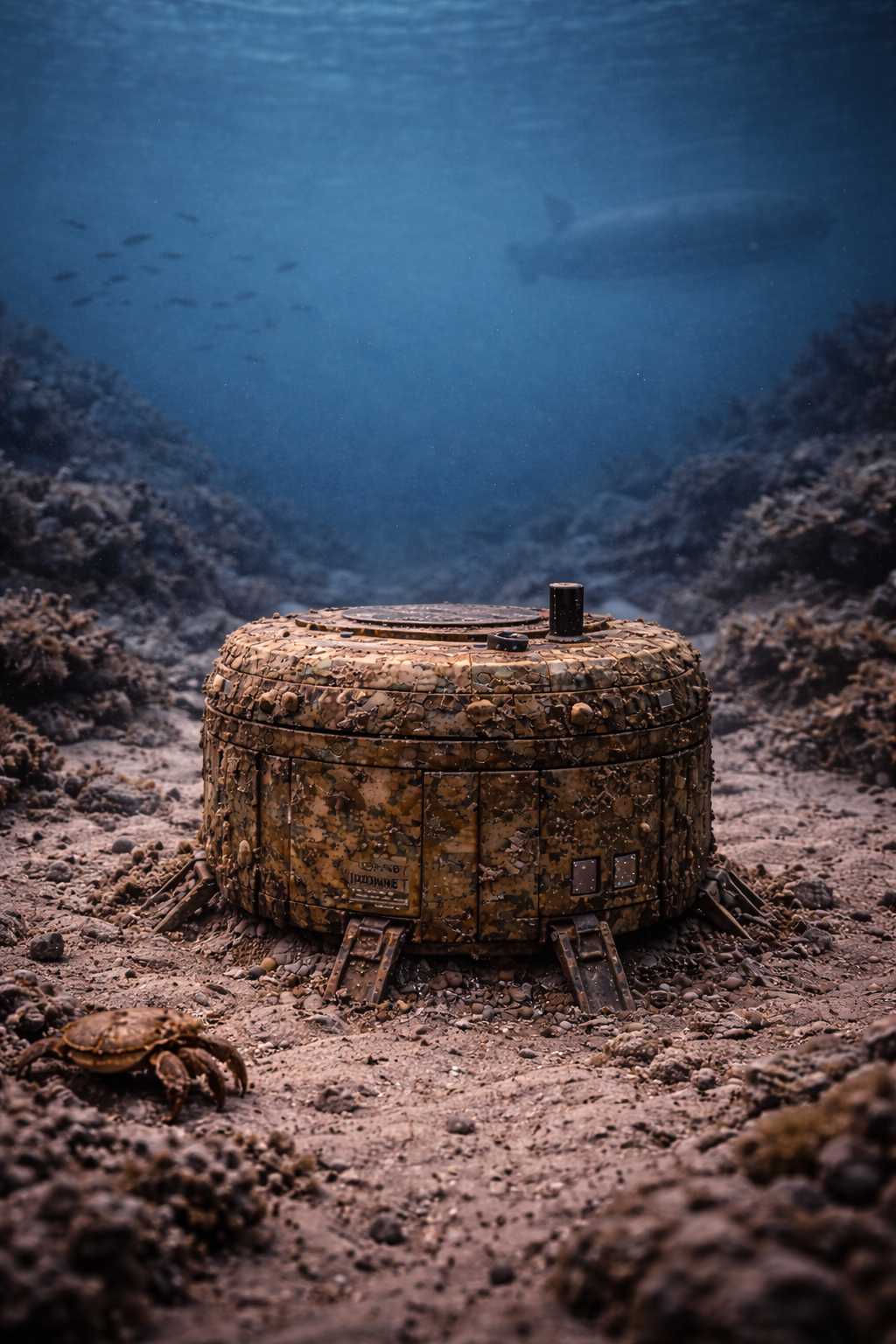

System Architecture
SeismicComm is built around a ground-coupled communication architecture that enables data transmission through solid earth, rock, sediment, and dense substrates using controlled seismic signaling.
System architecture and methods patent pending.
Rather than transmitting information through electromagnetic space, the system encodes data into mechanical waveforms that propagate through the physical medium itself. Communication occurs beneath the surface, through mass and continuity, allowing operation underground, underwater, and across obstructive terrain where conventional systems cannot be relied upon.
The effectiveness of this approach is not theoretical. Every time an earthquake is detected or felt hundreds or thousands of miles from its origin, it demonstrates the Earth’s natural ability to carry mechanical energy across vast distances. SeismicComm applies this same physical principle in a controlled, engineered form—transforming a well-understood natural phenomenon into a reliable communication channel.
By using the Earth as the transmission medium, SeismicComm fundamentally changes both the communication model and the threat model. The same material that carries the signal also provides protection. The planet is not only the channel—it is the armor.
Seismic Wave Communication Layer
SeismicComm nodes mechanically couple to their surrounding environment, enabling the controlled generation and detection of low-frequency seismic signals optimized for propagation through solid and semi-solid media. These signals are designed for persistence, reliability, and survivability rather than bandwidth, allowing critical data to move through environments that defeat radio, optical, and wired communication.
Because seismic energy propagates through ground and water-adjacent substrates, the system operates seamlessly across buried, submerged, and shielded environments without reliance on exposed antennas, cabling, or line-of-sight pathways.
Subsurface Mesh Network
Nodes form a distributed, self-organizing mesh network beneath the surface. Each node functions as both a communication endpoint and a relay, enabling multi-hop transmission through the subsurface over extended distances. The mesh architecture provides redundancy, path diversity, and fault tolerance, allowing communication to persist even when individual nodes are degraded, isolated, or removed.
Signals remain confined within the physical medium, resulting in inherently low-probability-of-intercept communication that is difficult to detect, disrupt, or deny.
Resilience and Security by Physics
SeismicComm’s resilience is achieved through physical design rather than dependence on spectrum access, centralized control, or exposed infrastructure. Subsurface operation naturally shields the system from electromagnetic interference, jamming, atmospheric effects, and surface-level disruption.
Power management, signal handling, routing decisions, and network behavior are handled locally at each node. This eliminates centralized points of failure and allows the network to adapt dynamically as conditions change. Failure is treated as a condition to route around, not an event to recover from.
Interoperability Across Domains
While the core network operates entirely through ground-coupled seismic communication, SeismicComm supports controlled interfaces to surface, maritime, and space-based systems. These interfaces allow seismic networks to interlock with conventional communication layers when available, enabling data exchange across underground, surface, and orbital domains without making external systems a dependency.
In this architecture, seismic communication serves as the resilient foundation layer, while other systems extend reach and capacity when conditions allow.
Architectural Philosophy
SeismicComm is designed for environments where communication cannot fail. By anchoring connectivity in the physical environment and distributing control across autonomous nodes, the architecture eliminates single points of failure and extends communication into conditions where traditional assumptions no longer hold.
This is secure, resilient communication built into the planet itself—silent, persistent, and engineered to endure.
The Future of Space Exploration
The future of space exploration depends on more than propulsion, habitats, or life-support systems. It depends on continuity.
As human operations expand beyond Earth, communication can no longer be treated as a peripheral subsystem. On the Moon, Mars, and eventually across the solar system, crews, autonomous systems, and infrastructure will operate in environments where delay, disruption, and isolation are inherent. Line-of-sight is intermittent. Orbital relay coverage is finite. Surface conditions are hostile. Failure modes multiply as distance increases.
The first true test of this reality will be the Moon and Mars.
These environments expose the limits of conventional space communication architectures. Dust, radiation, terrain occlusion, solar events, and prolonged surface operations place constant stress on exposed systems. As missions scale from exploration to sustained presence, communication continuity becomes a mission-critical requirement—not a convenience.
SeismicComm addresses this challenge by introducing a new planetary communication layer.
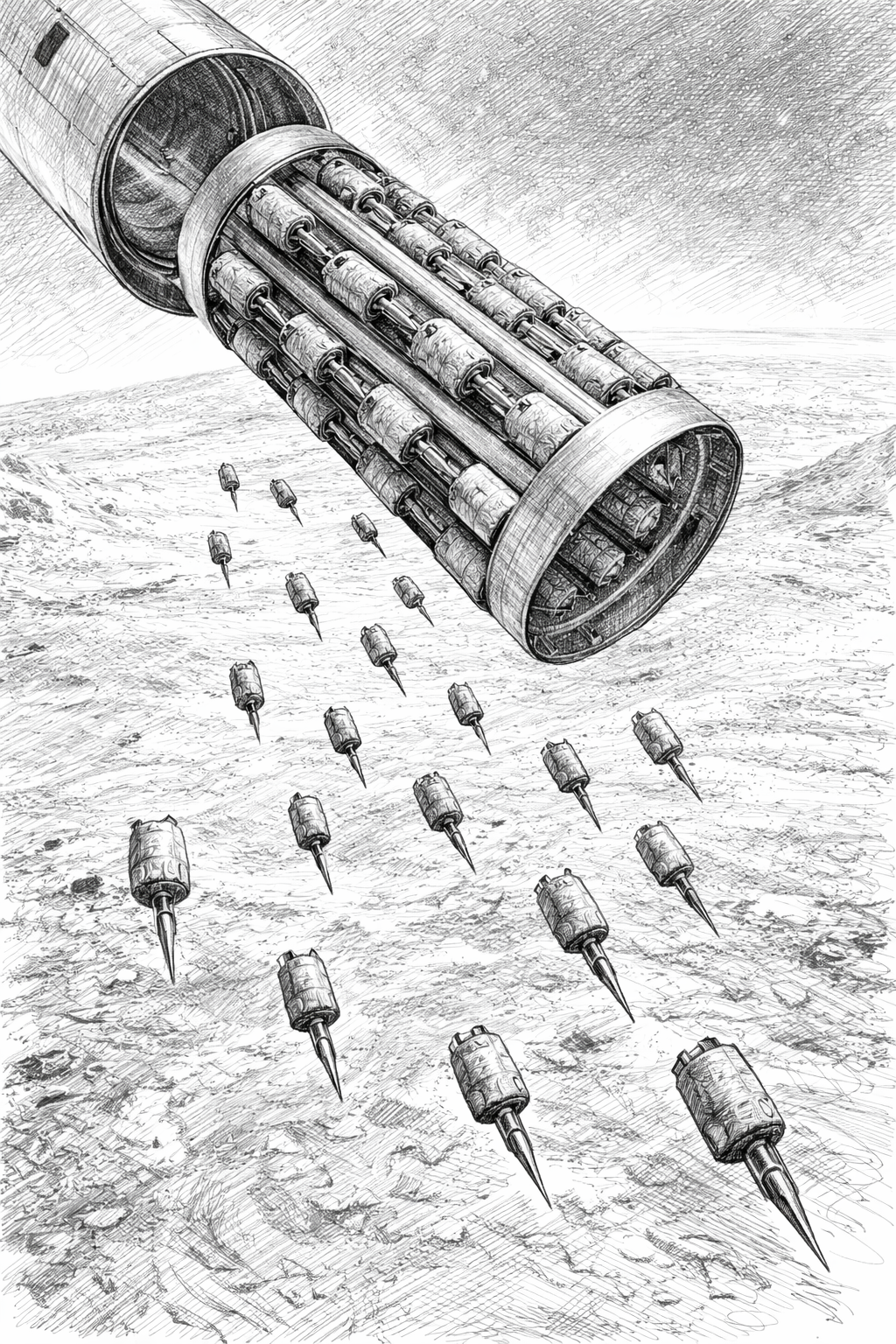
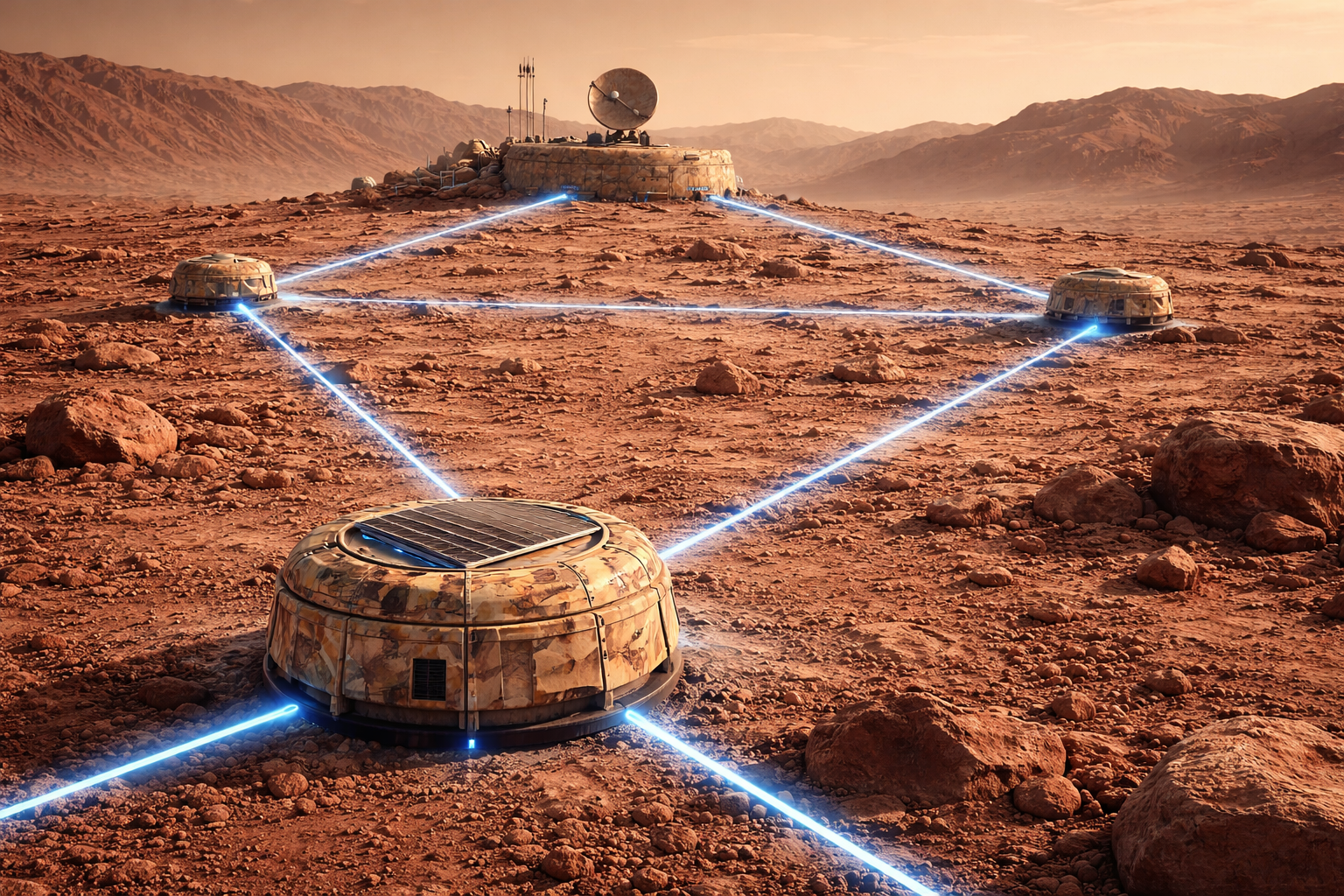
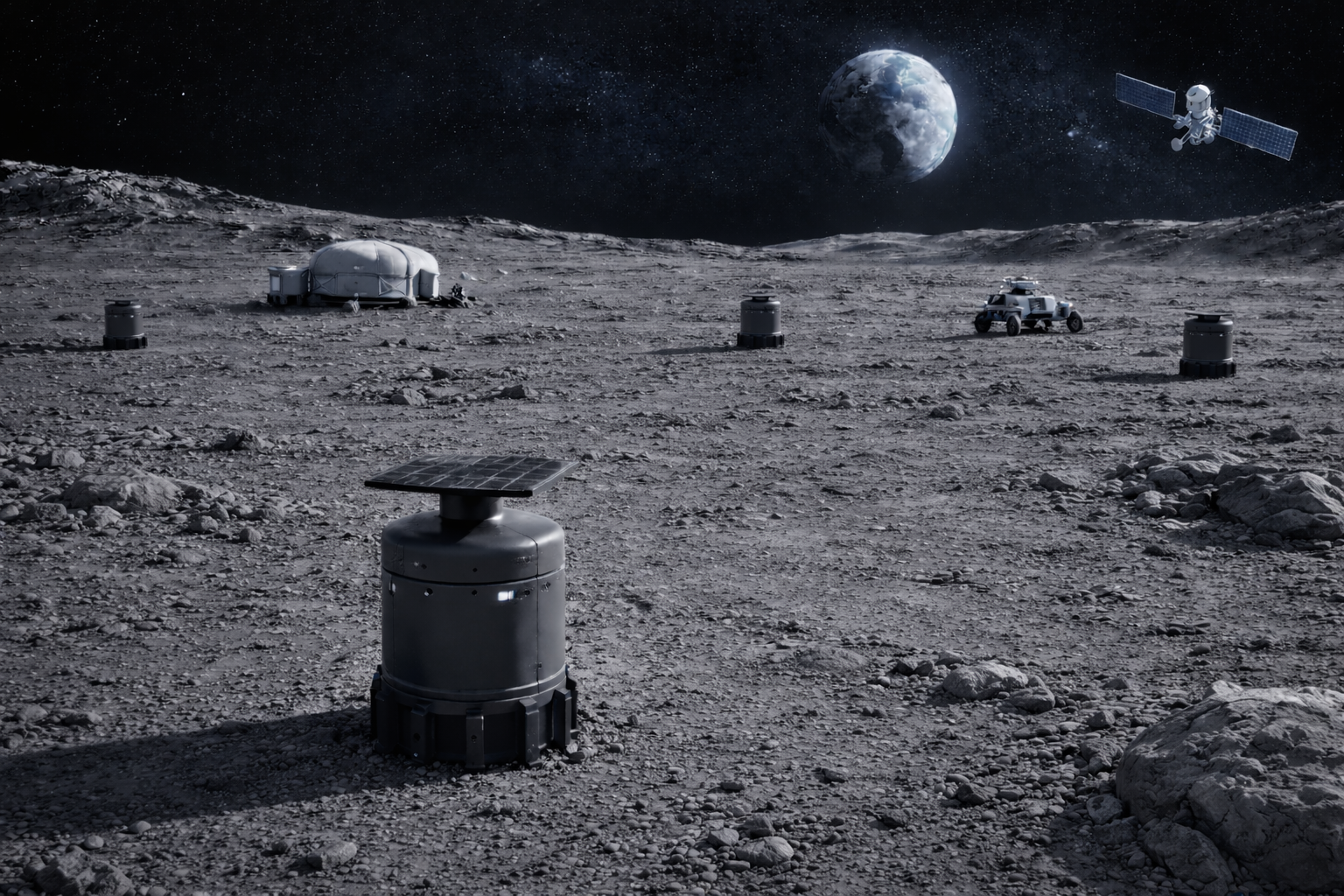
Our system deploys autonomous, ground-coupled seismic nodes that embed directly into regolith and subsurface rock, forming a persistent communication network rooted in the planetary body itself. Using controlled seismic signaling, data propagates through solid ground rather than through air, orbit, or contested electromagnetic spectrum.
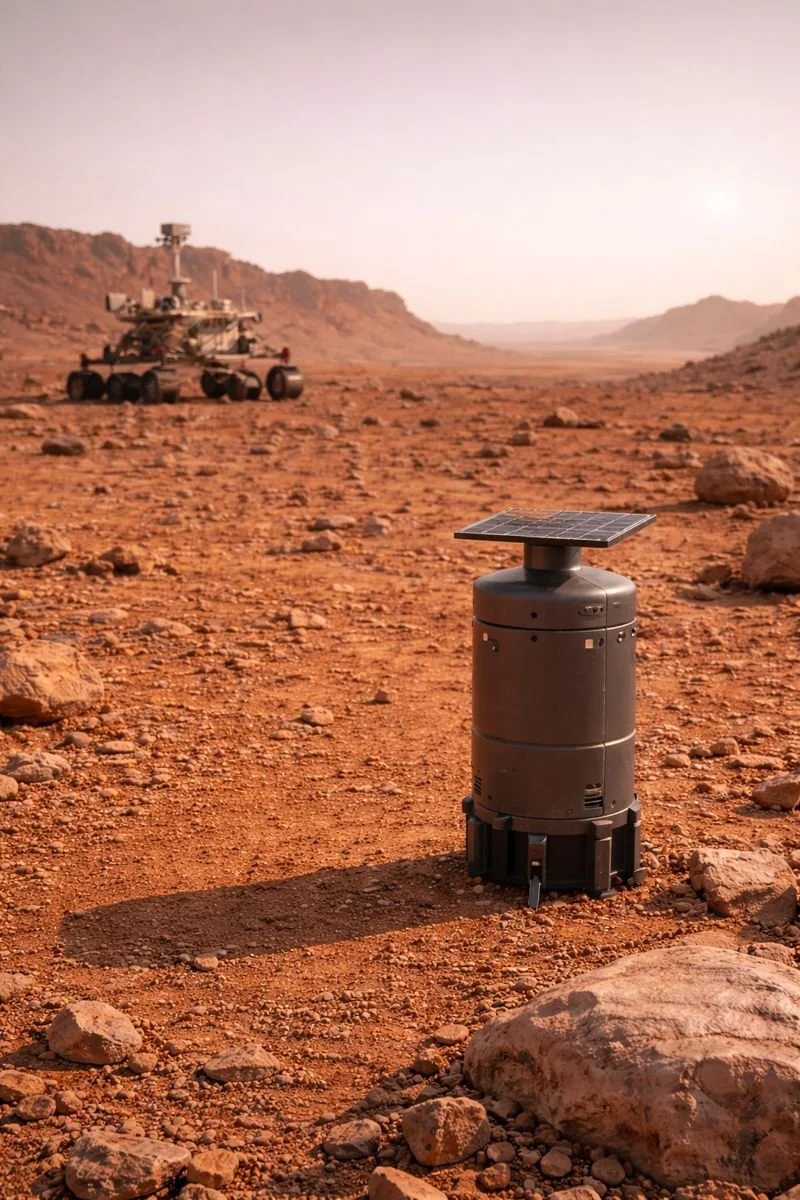
On the Moon and Mars, this enables a subsurface communication mesh that connects surface assets, hardened facilities, underground habitats, and remote outposts—independent of continuous orbital relay availability. Nodes self-organize into redundant pathways through the planetary medium, providing resilience against surface disruption, environmental extremes, and system degradation.
This architecture is not designed to replace RF or satellite communications. It is designed to ensure that no single layer becomes a point of failure.
The Moon and Mars represent the first deployment of a broader concept: planetary-scale communication systems that grow with human presence, persist through disruption, and operate wherever humans build, explore, or survive.
As humanity moves deeper into space, communication must evolve from something we transmit into something we anchor.
SeismicComm is building the communication foundation for that future.
We Are Not Building a New Network. We Are Completing the One the World Already Depends On.
Modern communications are extraordinary.
Fiber moves light across continents.
Satellites connect the planet.
Cellular and RF networks deliver bandwidth at a scale unimaginable a generation ago.
But all of them share something fragile:
They exist above the ground,
within the electromagnetic spectrum,
and inside assumptions that break under stress.
SeismicComm begins where those assumptions end.
The Problem Is Not Bandwidth
The Problem Is What Happens When Bandwidth Disappears
When communications fail, they rarely fail partially.
They fail suddenly, simultaneously, and everywhere at once.
Jamming.
EMP.
Solar events.
Physical destruction.
Subsurface or shielded environments.
Denied spectrum.
In these moments, performance no longer matters.
Continuity does.
SeismicComm is built for that moment.
A Different Physics, Not Another Radio
SeismicComm does not compete with radio, fiber, or satellite.
It operates beneath them.
By coupling directly into the Earth’s solid materials — rock, soil, sediment, and engineered subsurface structures — SeismicComm communicates through a medium that:
Cannot be congested by spectrum use
Cannot be jammed remotely like RF
Persists when surface and orbital infrastructure are compromised
Exists everywhere infrastructure is buried, anchored, or protected
This is not redundancy in the same domain.
It is orthogonality.
Designed as a Control Backbone, Not a Data Pipe
SeismicComm is intentionally not a high-throughput system.
It is a control and continuity layer.
The same philosophy used in:
Nuclear command-and-control systems
Submarine ELF communications
Spacecraft safe-mode channels
Systems that are not fast — but are always reachable.
SeismicComm carries:
Secure command messages
Authentication and identity
Timing and synchronization
Network coordination and recovery signals
When high-speed networks are available, they do the heavy lifting.
When they are not, SeismicComm ensures the system never goes dark.
Built to Work With Everything You Already Use
SeismicComm is designed to integrate directly into modern communication stacks.
A SeismicComm node is not a replacement device.
It is a hybrid interface.
It pairs with:
RF and cellular systems
Satellite terminals
Fiber and wired infrastructure
Optical and line-of-sight links
Under normal conditions:
SeismicComm is quiet, low-duty, invisible
Under disruption:
It becomes the persistent backbone
Maintaining command, trust, and coordination
Allowing modern systems to re-form rather than collapse
This is how resilient architectures are built:
fast when possible, survivable when necessary.
Intelligence at the Physical Layer
SeismicComm does not treat the Earth as a passive channel.
It measures it.
Learns it.
And uses it.
By leveraging channel-state awareness and ground-response fingerprinting, SeismicComm enables:
Adaptive modulation matched to local geology
Reliable signaling at extremely low signal-to-noise ratios
Physical-layer authentication bound to location
Resistance to spoofing without constant key exchange
The ground itself becomes part of the system’s identity and security model.
Why This Matters Now
As networks become:
More autonomous
More distributed
More mission-critical
Failure is no longer acceptable.
Recovery must be engineered in, not improvised.
SeismicComm is built for the environments that break modern assumptions:
Contested and denied electromagnetic domains
Underground and shielded infrastructure
Critical facilities that must remain commandable
Extreme and remote operations
Future off-world surface networks where subsurface coupling is unavoidable
Not a Replacement
A Foundation
SeismicComm does not try to outperform modern communications.
It ensures they are never alone.
By adding a survivable, ground-based signaling layer beneath existing technologies, SeismicComm enables communication architectures that:
Degrade gracefully instead of catastrophically
Remain coherent under stress
Can always be brought back under control
This is not about building another network.
It is about ensuring the networks the world already depends on
never lose their backbone.
The Ground Is Not the Adversary

Modern communication systems are built on the assumption that the environment is something to be overcome — distorted, corrected, or ignored. We believe this assumption is incomplete.
At SeismicComm, our doctrine begins with a different premise: the physical medium itself contains structure, identity, and opportunity. The ground is not a passive obstacle. It is an active participant — one whose response can be observed, learned, and thoughtfully engaged.
Rather than forcing information through hostile conditions, we explore whether communication can emerge through cooperation with the medium’s natural behavior. This perspective reframes variability as structure, complexity as signal, and environment as context rather than impairment. Our ongoing research investigates how awareness of a medium’s unique response may enable communication that is more resilient, more secure, and more efficient in environments where conventional approaches fail.
We do not claim this challenge is solved. We believe it is worth pursuing — rigorously, carefully, and with respect for the physics involved. This philosophy defines our research direction and underpins our patent-pending methods, which are currently under active development.
SeismicComm exists to explore what becomes possible when communication systems adapt to the world as it is, instead of demanding the world adapt to them.
Seismic Communication: The Silent Pulse That Defies Denial
Picture this: A lunar habitat, entombed beneath gray regolith, suddenly goes dark. A massive solar coronal mass ejection has unleashed a torrent of charged particles, turning the sky into a lethal plasma storm. Every antenna is slag—fried by induced currents, satellites blinded, surface relays vaporized. Earth is a distant blue marble, but the link is severed. Commanders on the ground watch telemetry flatline. Lives hang in the balance. How do you reestablish contact? How do you confirm the crew is alive, send emergency protocols, or guide a rescue?
Or envision a subterranean military network in a hotly contested theater: enemy forces dominate the electromagnetic battlespace. Jammers blanket the spectrum with white noise; GPS is spoofed; drones hunt for any radio emission. An EMP detonator waits for the slightest transmission signature. Surface nodes are kinetic targets—cratered by precision strikes. In this electromagnetic hellscape, how do you maintain unbreakable command and control? How do you exfiltrate sensor data or coordinate a counterstrike without betraying your position?
Conventional electromagnetic systems—radio, microwave, laser—crumble under these assaults. They are elegant in benign conditions but catastrophically fragile when the environment or the enemy turns hostile.
The seismic solution whispers through the ground itself: a revolution in resilience.
The Physics of Defiance: Why the Ground Wins When the Air Fails
Seismic and acoustic communication forges data into mechanical waves—compressional P-waves that push and pull, shear S-waves that twist solids, or pressure waves that ripple through fluids—driven by high-force transducers buried deep in the geological or regolith medium.
These waves obey the medium’s elastic heart: density ρ, bulk modulus K, shear modulus μ. Their speeds are precise—
V_p = √((K + 4/3μ)/ρ) for P-waves,
V_s = √(μ/ρ) for S-waves.
Losses are tamed: geometric spreading fades as ≈ 1/r, while material absorption is captured by the quality factor Q (100–500 in hard rock), yielding gradual amplitude decay ≈ exp(−ω r / (2 Q V)).
Careful scaling—transducer power, coupling efficiency, lithology—unlocks multi-kilometer ranges with surprisingly modest peak energy. Dense, unfractured rock is the ideal conduit; modeling and field analogs prove it works.
Now contrast the electromagnetic fate. In open space, the Friis equation governs gentle loss: P_r / P_t = (λ / (4πr))^2. But plunge into conductive reality—wet soil, seawater, planetary dust—and the skin depth δ = √(2 / (ω μ σ)) becomes the executioner. At σ > 0.01 S/m, δ collapses to mere centimeters or meters. Fields decay exponentially as exp(−r/δ), annihilating signal-to-noise ratio before any meaningful distance. Optical beams are simply swallowed by opaque overburden.
The dramatic reversal: mechanical waves embrace the medium that murders EM signals. No exponential cliff, no impenetrable barrier—just predictable, survivable propagation through the very ground that betrays radio.
The Invisible Signal: Why No Adversary Can Hear the Whisper
Imagine an enemy sweeping the sky with exquisite receivers, hunting for the faintest emission. They hear nothing. Why? The acoustic impedance chasm between ground (Z_ground ≈ 10^6–10^7 kg/m²s) and air (Z_air ≈ 400 kg/m²s) reflects >99% of the energy back into the earth. The signal never betrays itself aloft.
To intercept, the foe must physically occupy your terrain—plant sensors in your medium. An impossible task in denied zones.
Layer on spread-spectrum coding, AI that dances frequencies across infrasonic to low-audio bands, and real-time notch filtering against natural rumble (wind, traffic, quakes). The signal hides in plain vibration, relocating spectrally when challenged—graceful, unbroken persistence where EM links would scream and die.
The Collapse of Electromagnetic Empires—and the Rise of Mechanical Resilience
High-frequency carriers (MHz–THz) grant EM systems their bandwidth bounty, but they also forge their Achilles’ heel:
In lossy media, exp(−r/δ) annihilation drives SNR to zero, collapsing Shannon capacity C = B log₂(1 + SNR) catastrophically early.
Jamming floods fragile low-noise fronts.
EMP forges lightning in antennas: V ≈ −(∂B/∂t) · A, scaled by vast effective areas.
Cosmic rays and solar fury erode delicate high-frequency electronics through upsets and cumulative dose.
Seismic systems endure the same universal trials—spreading, scattering, absorption—yet remain untouched by electromagnetic wrath. No skin-depth guillotine at low frequencies. No vast apertures begging for induced catastrophe. No exquisite RF chains begging for radiation damage.
The result is stark: when the electromagnetic world burns, the ground still speaks.
Buried Fortresses: Architecture That Laughs at Threat
Nodes are not exposed—they are interred. Transducers and geophones/hydrophones couple perfectly from beneath the surface. Electronics, batteries, processors lie armored by overburden. Only the solar array dares the surface—low, redundant, self-cleaning with ultrasonic vibration and coatings.
This minimal exposure is deliberate genius. Military signatures plummet: invisible to eyes, thermals, radars. Kinetic strikes waste fury on empty dirt. Blast waves are muffled. On extraterrestrial worlds, regolith becomes shield and thermostat—blocking cosmic rays, taming thermal extremes without power-hungry heaters or coolers.
Hardening Forged in Immunity
EMP and IEMI Defiance
No antennas, no long conductors. Supercapacitor-driven mechanical pulses and buried, shielded circuits shrug off pulses that would incinerate radio nodes.Space Radiation Conquest
Simple analog chains and processors thrive with rad-hard parts; regolith absorbs the galactic barrage.Environmental Indestructibility
The medium itself buffers temperature and shock; only the photovoltaic skin needs dust care.Power Mastery
Short, sharp mechanical bursts replace the constant gluttony of RF amplifiers.
This is survivability against the full apocalypse—nuclear effects, electronic warfare, kinetic fury, space weather—while EM architectures lie in ruins.
The Bandwidth Horizon: From Constraint to Breakthrough
Low carrier frequencies cap raw bandwidth B in C = B log₂(1 + SNR), far from gigabit dreams. Yet the future pulses with promise: channel-fingerprint modulation turns the medium’s unique reverberation into a vast symbol library. Self-calibrating multi-tones, coded sequences, machine-learning-decoded eigenmodes explode constellation size M, harvesting log₂(M) bits per symbol—orders of magnitude richer than crude schemes.
Augmented by AI compression and adaptation, this elevates throughput dramatically for the data that matters most: commands, telemetry, sensor streams, compressed imagery.
In the end, seismic communication is not merely an alternative—it is the last voice when all others are silenced. A silent, stubborn pulse through unbreakable earth, delivering connectivity where physics and adversaries have declared it impossible. For space pioneers and warfighters alike, it is the thread that refuses to break.
The next era of humanity’s expansion beyond Earth and into the cosmos.
Here are five refined lines, with the network and resilience clearly leading:
A resilient network is the first infrastructure humanity must establish beyond Earth.
Before habitats, before industry, before expansion, connection must endure.
These networks embed themselves into new worlds, operating where surface systems fail.
They persist through distance, disruption, and the silence of space.
This is how humanity builds a lasting presence across planets—connected, aware, and unbreakable.
The Future
Imagine a near-future landscape where resilience is woven into the fabric of connectivity itself: networks of sophisticated nodes, engineered in diverse forms to suit any theater of operation—from lightweight, handheld units rapidly emplaced by hand or air-dropped across rugged terrain, to larger, high-power anchors deliberately buried meters deep in soil or rock for enduring stability, and specialized variants sealed for submersion in oceanic depths or optimized for the dusty regolith of distant worlds. These nodes, deployed in hours rather than days, self-organize into expansive meshes that span continents, seabeds, or planetary surfaces, adapting seamlessly to terrestrial battlefields, underwater expanses, lunar craters, or Martian plains. Powered autonomously by solar arrays, advanced batteries, or alternative sources, they form a persistent grid that operates independently of vulnerable surface infrastructure, extending coverage through multi-hop relaying and integrating with orbital assets only when advantageous.
At the heart of this architecture lies a communication paradigm that prioritizes unassailable security over sheer velocity: data—ranging from critical commands and telemetry to sensor readings and compressed imagery—travels encoded in mechanical waves through the medium itself, shielded by the earth's impenetrable layers from interception, jamming, or electromagnetic threats. Transmissions emerge not as blazing torrents but as deliberate, concealed pulses, sufficient for mission-essential exchanges in environments where speed is secondary to survival. Yet this seismic backbone is designed to interoperate fluidly with conventional electromagnetic networks, weaving a hybrid web of information: in undisturbed conditions, data flows swiftly via radio or laser links for high-throughput relay, while in hostile or denied areas—beset by jamming, solar storms, or adversarial disruption—it shifts seamlessly to the slow, secure embrace of mechanical propagation, ensuring unbroken continuity. This backbone complements rather than supplants high-bandwidth electromagnetic networks, serving as the steadfast underlayer that endures solar storms, electronic warfare, or infrastructural collapse, ensuring continuity when satellite links falter or radio spectra are contested.
Yet the true elegance unfolds in the network's dual symphony of transmission and perception: every node not only speaks but listens intently to the ground's subtle vibrations—the encoded signals of its kin intertwined with the natural and human-induced rhythms of the world. Footsteps of patrolling forces, the low rumble of vehicles, seismic shifts in geological formations, or ambient micro-tremors all converge into rich data streams, processed onboard with artificial intelligence to yield real-time insights. On battlefields, this manifests as dynamic 3D maps revealing enemy movements with precision unattainable by disrupted radar or imagery, granting commanders an ethereal edge in contested domains; in the silent pursuit of Earth's hidden wealth, it pierces the veil of overburden to illuminate vast subsurface reservoirs—oil-saturated formations, gas-trapped strata, or mineral veins gleaming in digital renderings—accelerating discovery with unprecedented efficiency and guiding extraction in remote or hostile terrains; on extraterrestrial outposts, it monitors environmental changes, maps regolith stability for habitats, and relays vital updates to Earth-bound missions, forging pathways for sustained human presence amid the void.
This converging technology—rooted in intelligent mesh networking, adaptive modulation, and multi-environment sensor fusion—promises a foundational enhancement to global and interplanetary infrastructure, embodying patent-pending innovations that represent our visionary outlook for the future, still in development yet grounded in rigorous theory and testing. It empowers military forces with deniable, persistent awareness in contested domains; equips explorers with autonomous tools for planetary science and habitation; and transforms resource prospecting into a symphony of revelation, uncovering the planet's buried treasures with minimal intrusion while extending the same capabilities to alien worlds rich with untapped potential. As these systems mature, they will stand as a quiet pillar of sovereignty and endurance, transforming the planet's own substrate—and those of distant celestial bodies—into an allied force for security, exploration, discovery, and sustained human presence across worlds—a forward-looking evolution where resilience becomes the ultimate enabler of progress.